
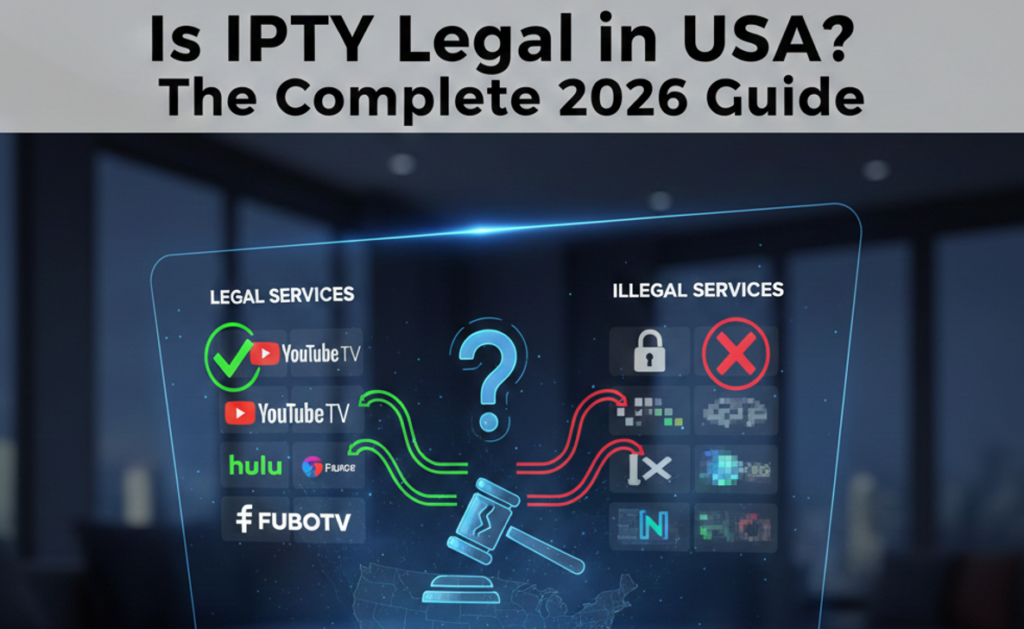
Is IPTV Legal in the United States
If you’ve searched for a cheaper alternative to cable TV, you’ve probably come across IPTV services promising thousands of channels, live sports, and premium content at a fraction of the price. That’s where confusion starts. Many people ask the same question: Is IPTV legal in the USA, or is it illegal?
The short answer is yes, IPTV technology is legal in the United States — but the legality depends entirely on the service and the content it provides. IPTV itself is just a way to deliver television over the internet. Major companies like YouTube TV, Hulu, and Sling TV all use IPTV technology legally every day. The problem arises when IPTV services stream copyrighted content without permission.
This article removes the confusion and gives you a clear, up-to-date explanation for 2026. You’ll learn how IPTV works, what makes an IPTV service legal or illegal in the US, which copyright laws apply, the real risks of using illegal IPTV, and how to safely choose a legitimate provider. By the end, you’ll know exactly how to stream legally, protect yourself, and avoid costly mistakes.
Understanding IPTV: What It Is and How It Works
What Does IPTV Stand For?
IPTV stands for Internet Protocol Television, a technology that delivers television content over the internet instead of traditional methods like cable or satellite. Unlike conventional TV, which relies on physical cables or satellite signals, IPTV streams data through your internet connection, making it more flexible, scalable, and compatible with multiple devices such as smart TVs, smartphones, and streaming devices.
Key differences from traditional TV:
- Cable TV: Uses coaxial cables for broadcast signals.
- Satellite TV: Uses satellites to transmit channels directly to a dish on your home.
- IPTV: Uses your internet connection to deliver content, either live or on-demand.
This approach allows for interactive features like pausing live TV, time-shifting content, or accessing large libraries of movies and shows at any time.
How IPTV Technology Works
At its core, IPTV works by sending video content as data packets over internet protocols, similar to how websites and online videos are delivered. This method ensures seamless streaming across devices without the need for traditional broadcast infrastructure.
Key delivery methods:
- Live Streaming: Real-time broadcasts of TV channels, sports events, and news.
- On-Demand Streaming (VOD): Watch movies, shows, and other content whenever you want.
- Time-Shifted IPTV: Allows pausing, rewinding, or replaying previously aired content.
The underlying technology uses servers and Content Delivery Networks (CDNs) to distribute data efficiently. While this may sound technical, the user experience is simple: open an IPTV app, select a channel or show, and stream instantly with minimal buffering.
Types of IPTV Services
Video on Demand (VOD)
Video on Demand allows users to watch movies, TV series, and other programs whenever they like, without being restricted by a broadcast schedule. Examples include Netflix-style services that let you pick and choose content at any time.
Time-Shifted IPTV
Time-shifted IPTV provides flexibility to watch programs after they air. This includes features like catch-up TV, pause, rewind, or replaying shows from earlier in the day.
Live IPTV Streaming
Live IPTV streaming is similar to traditional broadcast TV but delivered over the internet. It is ideal for sports, news, and live events, allowing viewers to watch content in real-time while enjoying interactive features such as multiple camera angles or on-screen stats in some advanced platforms.
The Direct Answer: Is IPTV Legal in USA?
The Technology Itself Is 100% Legal
IPTV as a technology and delivery method is completely legal in the United States. It’s simply a way to transmit television content over internet protocols instead of traditional cable or satellite.
Major companies and legitimate streaming platforms use IPTV every day, including:
- YouTube TV
- Hulu + Live TV
- Sling TV
- FuboTV
- DirecTV Stream
The key point is that IPTV itself is not illegal — it’s the content being streamed that determines legality. Think of it like a car: the car itself isn’t illegal, but driving without a license or speeding can be.
Legality Depends on Licensing and Content Rights
While IPTV technology is legal, unauthorized content distribution is not. The legality hinges on whether the service has proper rights to the content it streams.
- Licensed content: Services that pay for streaming rights or have contracts with networks are legal.
- Unlicensed content: Services that distribute pirated channels, movies, or sports events without permission are illegal, even if the app works perfectly.
This distinction is critical. The same technology that powers YouTube TV legally can be used by illegal IPTV providers to deliver pirated content.
The Current Legal Landscape in USA (2026)
Several laws and regulations define IPTV legality in the US:
- Digital Millennium Copyright Act (DMCA): Protects copyrighted digital content, including streamed videos. IPTV service providers distributing unauthorized content can face fines or takedowns.
- Protecting Lawful Streaming Act (2020): Specifically targets operators of large-scale illegal streaming services, making it a federal felony to operate such services.
- Enforcement Trends:
- Illegal IPTV services have been increasingly targeted by US law enforcement in 2025–2026.
- Court cases often focus on operators, not individual users.
- Users may still face warnings, civil action, or, in rare cases, criminal prosecution if they redistribute content.
Bottom line: IPTV technology is legal, but streaming copyrighted content without permission is not. Verifying the licensing of any service you use is essential to stay on the right side of the law.
Legal vs Illegal IPTV Services: Know the Difference
What Makes an IPTV Service Legal in USA?
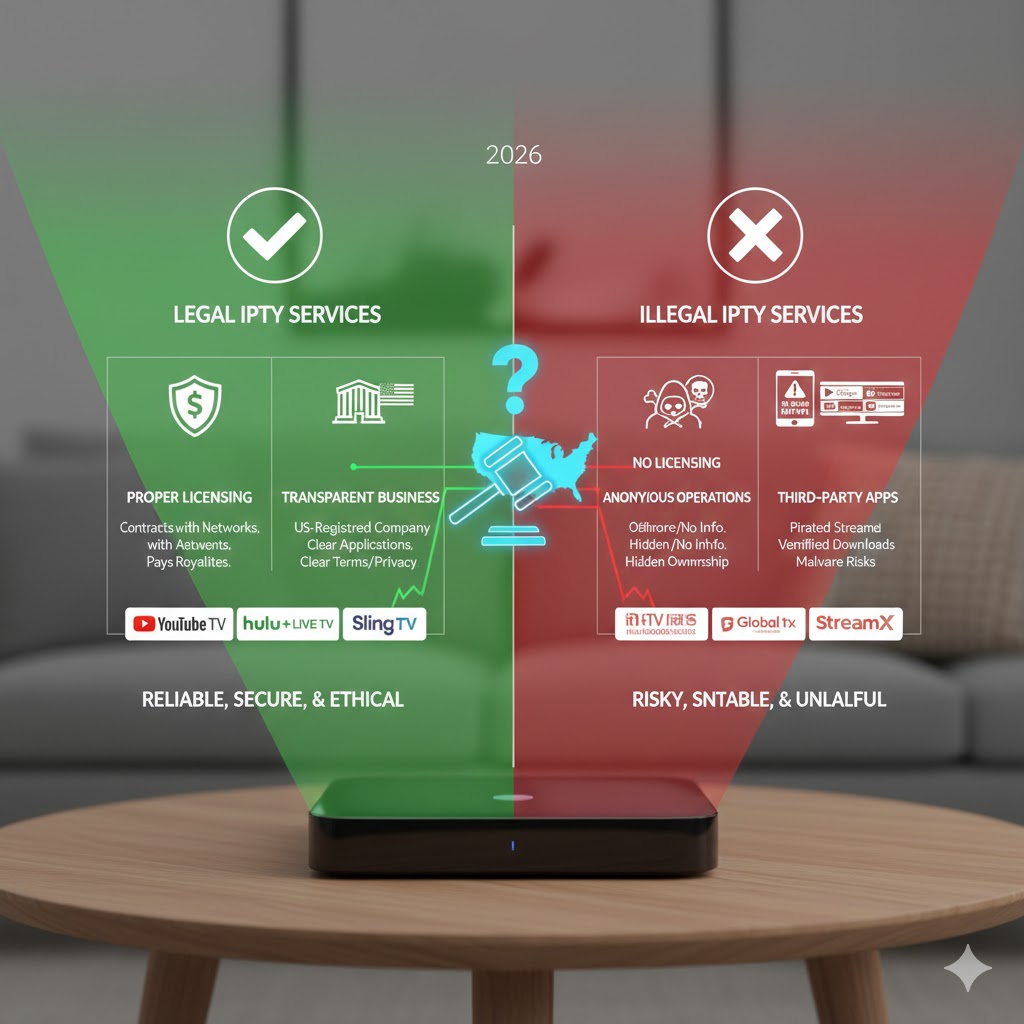
To determine if an IPTV service is legal, you need to look at licensing, business transparency, and operational practices. Legitimate services operate openly and follow copyright laws.
Proper Licensing Agreements
Legal IPTV providers secure official licenses from content creators and distributors. This ensures that:
- Networks and studios are compensated via royalties
- All content is distributed legally
- The service complies with FCC and US copyright regulations
Without proper licensing, an IPTV service is illegal, regardless of how smooth the streaming is.
Transparent Business Operations
A legal IPTV provider operates like any legitimate company:
- Registered as a business entity in the US or another recognized jurisdiction
- Provides clear terms of service and privacy policies
- Offers professional customer support
- Uses legitimate payment processing (credit cards, PayPal, etc.)
These factors ensure accountability and consumer protection.
Examples of Legal IPTV Providers
Some well-known legal IPTV services include:
- YouTube TV
- Hulu + Live TV
- FuboTV
- Sling TV
- DirecTV Stream
- Philo
These services use IPTV technology to deliver licensed content, ensuring legality and safety.
Red Flags of Illegal IPTV Services
Illegal IPTV providers often promise too much at too low a cost. Here are some warning signs:
Suspiciously Low Pricing
- Offers like $10–$15 per month for thousands of channels are usually unsustainable and illegal.
Questionable Payment Methods
- Cryptocurrency-only payments
- Gift card-only options
- No standard credit card or PayPal support
Lack of Transparency
- No visible licensing information
- No company address or contact details
- Offshore hosting and anonymous operations
Suspicious Marketing Tactics
- Promotion primarily through social media groups
- No official apps in Google Play, Apple App Store, or Amazon Appstore
- VPN requirements suggested to access content
Content Library Red Flags
- Unlimited access to all premium channels globally
- Access to every sports league or pay-per-view (PPV) event
- No geographic restrictions at all
If an IPTV service exhibits several of these signs, it’s very likely illegal and unsafe to use.
US Copyright Laws and IPTV: What You Need to Know
Understanding US copyright law is essential for anyone considering IPTV, because even if the technology is legal, streaming unauthorized content can have serious legal consequences.
The Digital Millennium Copyright Act (DMCA)
The DMCA, passed in 1998, is the cornerstone of US copyright protection for digital content. It protects movies, TV shows, music, and other creative works, including content delivered via IPTV.
Key points:
- Copyright holders can issue takedown notices for unlicensed content.
- Service providers distributing unauthorized content can face civil lawsuits, fines, or criminal penalties.
- Users are generally less likely to be prosecuted, but repeated or large-scale infringement could trigger legal action.
The DMCA ensures that copyrighted works are protected in the digital age, including streaming services.
The Protecting Lawful Streaming Act (2020)
Passed to close loopholes in online streaming, this act specifically targets operators of illegal streaming services.
- Focuses on the service providers, not the average user.
- Criminal penalties can include up to 10 years in prison and substantial fines.
- Applies to IPTV services distributing pirated live TV, sports, and premium channels.
This law was designed to discourage mass piracy and make illegal streaming a serious federal offense.
Who Gets Prosecuted?
In the US, enforcement prioritizes the operators of illegal IPTV services rather than individual users:
- Service operators can face federal felony charges.
- Resellers or commercial distributors can also be prosecuted.
- Individual users typically receive ISP warnings or civil notices, but criminal action is rare unless they redistribute content or run a commercial operation.
Recent enforcement actions show that the US government is actively shutting down illegal IPTV networks while encouraging users to switch to legal alternatives.
Key takeaway: Using IPTV is legal, but the content you access determines your risk. Always verify the service’s licensing and transparency before subscribing.
Risks of Using Illegal IPTV Services in USA
Using illegal IPTV services may seem cheap and convenient, but it carries significant legal, financial, and security risks. Understanding these dangers helps you make informed decisions and avoid costly mistakes.
Legal Risks and Consequences
For Service Providers
Operators of illegal IPTV services face serious criminal penalties, including:
- Up to 10 years in federal prison for large-scale piracy
- Substantial fines and asset seizures
- Criminal felony charges that can impact future employment and finances
For Users
While individual users are less likely to face criminal charges, they still risk:
- ISP warnings and service termination
- Potential civil lawsuits from copyright holders
- Rare, but possible, criminal prosecution if redistributing content or using services commercially
Security and Privacy Risks
Malware and Viruses
Illegal IPTV apps are often distributed through unofficial channels and may contain:
- Malware that infects devices
- Viruses that compromise data and system performance
- Hidden scripts to steal personal information
Financial Fraud
Unsecured payment systems used by illegal IPTV services increase the risk of:
- Credit card fraud
- Identity theft
- Scam operations that vanish after payment
No Consumer Protection
Unlike legitimate providers:
- Illegal services may disappear without notice
- Refunds or customer support are nonexistent
- Streaming quality is often unreliable and prone to interruptions
ISP Monitoring and Actions
ISPs monitor traffic to comply with copyright laws. Illegal streaming may trigger:
- Warning letters regarding copyright infringement
- Strike systems escalating to service restrictions
- Internet service termination if violations continue
Even if you are not prosecuted, repeated violations can affect your ISP record and internet access reliability.
How to Identify if an IPTV Service Is Legal
Knowing how to verify the legitimacy of an IPTV service is crucial for avoiding legal trouble, scams, and poor-quality streams. The following checks will help you identify a legal service.
The Licensing Test
Ask about content licensing before subscribing:
- Confirm official partnerships with networks, studios, or sports leagues.
- Look for press releases or announcements showing licensing agreements.
- Avoid services that cannot provide proof of legal rights to stream content.
A licensed service is legally allowed to broadcast the channels and shows it advertises.
The Price Reality Check
Extremely low prices often indicate illegal streaming:
- Compare the service’s subscription cost with industry standards.
- Understand that legal streaming involves licensing fees, content delivery infrastructure, and customer support, which justify higher costs.
- $10–$15/month for thousands of channels is almost always unsustainable and illegal.
Price alone can be a strong indicator of legality.
The Business Legitimacy Check
Official Presence
Check if the IPTV provider has:
- Registered company status in the US or recognized jurisdiction
- A physical business address
- Contact information including email, phone, or support channels
App Store Availability
Legitimate services usually distribute apps through:
- Google Play Store
- Apple App Store
- Amazon Appstore
Apps available only through unofficial downloads can be a red flag.
Payment Method Verification
Legal services use secure, standard payment systems:
- Credit card processing
- PayPal acceptance
- SSL encryption for payment safety
Avoid services that accept only crypto or gift cards without secure processing.
Customer Support and Documentation
A legitimate IPTV service provides:
- Clear terms of service and privacy policies
- Responsive customer support channels
- Money-back guarantees or trial periods
- Comprehensive documentation about the service and content
If any of these are missing, it may indicate the service is illegal or unreliable.
Best Legal IPTV Services in USA for 2026
Finding a reliable and legal IPTV service can be overwhelming, but knowing the top providers helps you make an informed choice. Here’s a comprehensive overview for 2026.
Comparison Overview
Legal IPTV services vary in price, channels, and features. Here’s a snapshot:
| Provider | Price Range | Channel Count | Key Features |
| YouTube TV | $65–$80/month | 85+ | Cloud DVR, sports add-ons, multi-device support |
| Hulu + Live TV | $70–$80/month | 75+ | On-demand library, DVR, multiple screens |
| FuboTV | $65–$80/month | 100+ | Sports-focused, 4K streaming, multi-device support |
| Sling TV | $35–$50/month | 40–50 | Budget-friendly, customizable packages |
| Philo | $25/month | 60+ | Affordable, entertainment-focused |
| Pluto TV | Free | 100+ | Ad-supported, live channels and VOD |
Premium Sports-Focused Options
For sports enthusiasts, these legal IPTV services offer live sports coverage and premium packages:
- FuboTV: Extensive international and domestic sports channels.
- YouTube TV (Sports Add-ons): Offers professional league coverage.
- DirecTV Stream: Multiple sports networks included in higher-tier plans.
These services prioritize live games, event coverage, and interactive sports features.
Budget-Friendly Legal Options
For viewers looking to save without breaking the law:
- Sling TV: Flexible packages, low-cost starting plans.
- Philo: Entertainment-focused, lowest price tier.
- Pluto TV: Free ad-supported service offering live channels and on-demand content.
Budget-friendly legal options may have fewer sports channels but still provide reliable streaming.
All-Around Best Value
Services combining price, channel selection, and features:
- Hulu + Live TV: Large on-demand library plus live channels.
- YouTube TV: Excellent channel lineup and cloud DVR storage.
- FuboTV: Sports and entertainment in one robust platform.
All-around options balance content, device support, and streaming quality.
Free Legal Alternatives
If you want completely free IPTV services, these are legitimate:
- Pluto TV: Offers live channels and VOD with ads.
- Tubi: Free movies and shows on-demand.
- Xumo: Live channels plus on-demand content.
- Peacock Free: NBC-owned free streaming with live events and shows.
These ad-supported services are 100% legal and safe, making them a great starting point for streaming without cost.
Special Cases and Gray Areas
While many IPTV services are clearly legal or illegal, some situations fall into gray areas where legality depends on how you use the service. Understanding these scenarios helps you avoid mistakes.
Is Using a VPN with IPTV Illegal?
Virtual Private Networks (VPNs) themselves are completely legal in the USA. They are commonly used for privacy, secure connections, and remote work.
However:
- Using a VPN to bypass geo-restrictions for content you do not have the rights to access may be illegal.
- Legitimate uses include protecting your privacy while streaming legal IPTV content or accessing your home network remotely.
The key is that VPNs are legal tools, but they cannot turn illegal content into legal content.
Kodi and Third-Party Add-ons
Kodi is a legal, open-source media player used to organize and stream media content.
- Kodi software itself is legal and widely used for legitimate streaming setups.
- Third-party add-ons can be legal or illegal depending on the content they provide.
- To stay legal, use official Kodi add-ons or services that provide licensed content.
Avoid add-ons that offer pirated movies, live TV, or premium sports channels without licensing.
International Content Access
Some IPTV services allow access to content from other countries:
- Many international channels require geo-restrictions due to licensing agreements.
- Circumventing these restrictions for unlicensed content may be illegal.
- Legal methods include subscribing to official international streaming services or using licensed packages that include international channels.
Understanding licensing boundaries is critical when accessing content from outside the US.
Sharing Your Legal IPTV Account
Most legal IPTV services allow household use, but restrict commercial sharing:
- Sharing with family members within the same household is usually permitted.
- Sharing accounts publicly, in bars, restaurants, or other commercial spaces, violates terms of service and could be illegal.
- Commercial use requires special licenses or business subscriptions from the provider.
Always review the terms of service to stay compliant.
What Happens If You Get Caught Using Illegal IPTV?
Using illegal IPTV services carries real consequences, though the severity depends on whether you are a user or a service operator. Understanding the process helps you stay safe and make informed choices.
The Warning Process
ISPs monitor traffic to enforce copyright laws. If illegal streaming is detected:
- You may receive copyright infringement notices from your ISP.
- Many ISPs use a strike system, where repeated offenses escalate the response.
- Failure to respond or continued usage can lead to service termination or further legal actions.
Typically, the process is designed to warn users before legal escalation, but ignoring notices increases risk.
Possible Consequences
Internet Service Termination
- ISPs may temporarily or permanently suspend your internet service for repeated copyright violations.
- Changing ISPs is possible, but records of repeated strikes may complicate future service agreements.
Legal Action from Copyright Holders
- Civil lawsuits and settlement demands are possible for infringement.
- Court cases can result in monetary penalties or mandatory compliance with copyright laws.
Federal Criminal Charges (Rare)
- Usually reserved for service operators or large-scale distributors.
- Can include charges for redistribution, commercial use, or public broadcasting of pirated content.
- Users are rarely prosecuted criminally unless they engage in organized illegal distribution.
Real-World Examples
Recent enforcement cases show:
- Illegal IPTV operators have faced federal raids, fines, and prison sentences.
- Some users have received settlement demands or civil lawsuits for redistributing pirated content.
- The lesson is clear: even casual use of illegal IPTV carries potential legal and financial risk.
Being aware of these consequences reinforces the importance of choosing legal, licensed IPTV services.
Making the Switch to Legal IPTV
Switching from illegal or uncertain IPTV services to legal providers is the safest way to enjoy streaming. Legal services offer reliability, quality, and peace of mind, ensuring you stay on the right side of the law.
Why Legal Services Are Worth It
Legal IPTV services provide multiple advantages over illegal alternatives:
- Reliability and uptime: Stable streaming without frequent outages.
- Superior streaming quality: High-definition, 4K, or multi-device support.
- Customer support: Professional assistance for troubleshooting and setup.
- No legal worries: Licensed content protects you from copyright infringement penalties.
- Consumer protection: Refunds, clear terms, and privacy safeguards.
Switching ensures your viewing experience is smooth, secure, and compliant.
Cost Comparison Reality
Many users assume illegal IPTV is cheaper, but when you factor in risks:
- Illegal services may disappear suddenly, wasting money.
- Legal subscriptions include licensing fees, app maintenance, and customer support, which justify the cost.
- Bundle options, free trials, and ad-supported alternatives make legal IPTV more affordable than most realize.
Understanding the true cost vs. risk emphasizes the value of legal providers.
Step-by-Step Transition Guide
Evaluate Your Viewing Needs
- Determine the channels and content you watch most frequently.
- Consider sports, entertainment, or family programming.
- Identify any specific requirements, like multi-device access or DVR capabilities.
Choose the Right Provider
- Use comparison guides to match your needs to services.
- Take advantage of free trials before committing.
- Read user reviews and check for licensing and transparency.
Setup and Installation
- Verify device compatibility with smart TVs, phones, or streaming boxes.
- Follow installation instructions for apps and set up accounts securely.
- Optimize settings for best streaming quality and performance.
Following these steps ensures a smooth, safe transition to a legal IPTV service.
Frequently Asked Questions (FAQs)
Can I go to jail for using IPTV?
Using IPTV itself is legal, but streaming unauthorized content can carry legal risks. In most cases, authorities target service operators rather than individual users. Criminal prosecution for casual users is rare, but redistributing or running an illegal IPTV service could lead to severe penalties, including jail time.
How do authorities track illegal IPTV users?
ISPs monitor internet traffic for copyright violations and respond to complaints from content owners. They can issue warning notices and use strike systems to escalate action if illegal streaming continues. Advanced tracking techniques allow authorities to identify repeated infringement, especially for large-scale or commercial activities.
Are all cheap IPTV services illegal?
Not all low-cost IPTV services are illegal, but prices that seem too good to be true—like $10–$15/month for thousands of channels—are usually red flags. Sustainable services that pay licensing fees and maintain infrastructure typically have higher subscription costs.
What about IPTV services from other countries?
International IPTV services can be legal if they are licensed in their home countries and comply with content distribution laws. Circumventing geo-restrictions to access unlicensed content from abroad may violate US copyright laws, so always verify licensing before subscribing.
Is IPTV better than cable TV?
IPTV offers several advantages over traditional cable, including flexibility, on-demand content, multi-device compatibility, and interactive features. Legal IPTV services often provide more control over viewing schedules and additional features like cloud DVR and simultaneous streams.
Can my ISP see what I’m streaming?
ISPs can monitor your internet traffic and detect unlicensed streaming activity. They typically cannot see the exact content if encrypted, but illegal services often trigger warnings or penalties due to copyright infringement complaints.
Are there any legal free IPTV options?
Yes, there are legitimate free IPTV services that are fully licensed, such as Pluto TV, Tubi, Xumo, and Peacock Free. These services are ad-supported and safe, providing access to live channels and on-demand content without any legal risk.
What should I do if I receive a copyright notice?
If you receive a copyright infringement notice, take it seriously. Stop using illegal services immediately, review your subscriptions, and consider switching to legal IPTV providers. Ignoring warnings can escalate to service termination or potential civil action.
Can I use IPTV for my business or bar?
Household use is generally allowed under most legal IPTV service terms. However, using a personal subscription for commercial purposes, like in a bar, cafe, or public venue, is usually prohibited. Businesses must acquire commercial licenses or provider-approved packages.
How often are illegal IPTV users prosecuted?
Individual users are rarely prosecuted, as enforcement typically focuses on service operators. Prosecution is more likely if a user engages in redistribution, runs a commercial service, or repeatedly violates copyright laws.