A Comprehensive Guide to IPTV
The way we consume television content has undergone a remarkable transformation over the past few decades. From traditional antenna broadcasts to cable and satellite TV, and now to internet-based streaming, the evolution of television technology continues to reshape our entertainment landscape. At the forefront of this revolution is IPTV, or Internet Protocol Television, a technology that’s changing how millions of people around the world watch their favorite shows, movies, and live events.
Understanding IPTV: The Basics
IPTV stands for Internet Protocol Television, which refers to the delivery of television content over Internet Protocol (IP) networks. Unlike traditional television formats that rely on satellite signals, cable connections, or terrestrial broadcasts, IPTV uses the same packet-switched infrastructure that powers the internet to deliver video content directly to your viewing device.
To understand IPTV more clearly, it helps to break down what makes it different from conventional TV delivery methods. Traditional television broadcasting works by transmitting signals through the air (terrestrial), via satellite dishes, or through coaxial cables. These signals are sent out to all viewers simultaneously, and you tune into the channel you want to watch. With IPTV, content is delivered on-demand through your internet connection, giving you much greater control over what you watch and when you watch it.
The “IP” in IPTV refers to Internet Protocol, the same technology that allows you to browse websites, send emails, and stream videos on platforms like YouTube. This means that IPTV content travels through the internet in small data packets, which are then reassembled by your device to create a seamless viewing experience.
How IPTV Works: The Technical Foundation
The technology behind IPTV might seem complex, but understanding the basic process can help you appreciate how it differs from traditional broadcasting. When you select a program or channel on an IPTV service, your request is sent to the IPTV provider’s server through your internet connection. The provider then streams the content directly to your device in real-time, or delivers it for download, depending on the type of IPTV service you’re using.
The IPTV delivery process involves several key components working together. First, the content provider must acquire or create the television content. This content is then encoded into a digital format suitable for streaming over IP networks. The encoded content is stored on servers or transmitted live through the network infrastructure. When a viewer requests content, it’s delivered through a managed network or over the open internet, depending on the IPTV service type. Finally, the viewer’s device (which could be a smart TV, set-top box, computer, or mobile device) receives and decodes the stream, displaying it on screen.
One of the critical differences between IPTV and traditional streaming services is that IPTV often uses a managed or dedicated network. This means that IPTV providers can offer better quality control, more reliable service, and features like guaranteed bandwidth for smooth playback. However, some IPTV services do operate over the public internet, which can sometimes lead to quality variations depending on your internet connection speed and stability.
Types of IPTV Services
IPTV encompasses several different types of services, each offering unique features and benefits. Understanding these categories can help you choose the right IPTV solution for your needs.
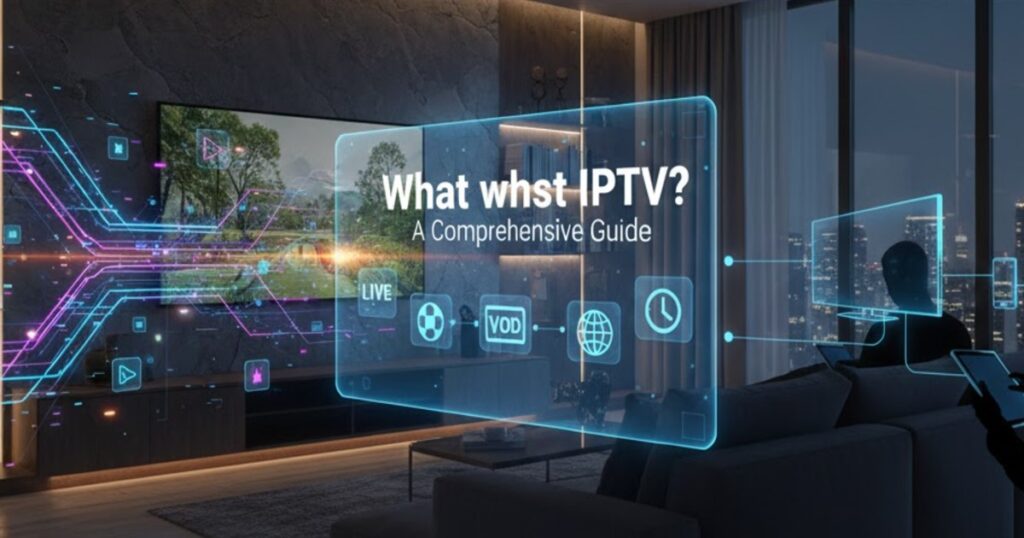
Live IPTV is perhaps the most similar to traditional television broadcasting. This service allows you to watch television programs as they’re being broadcast in real-time, just like conventional TV. You can tune into live news, sports events, and scheduled programming. The difference is that the content is delivered over an IP network rather than through traditional broadcast methods. Live IPTV is particularly popular for watching sports events, news channels, and live entertainment programs.
Time-Shifted IPTV gives viewers the ability to watch previously broadcast content at their convenience. This category includes catch-up TV services that let you watch shows that aired hours or days ago, as well as restart TV functions that allow you to restart a currently airing program from the beginning. This type of IPTV service typically stores content on servers for a limited period, giving viewers more flexibility in their viewing schedules.
Video on Demand (VOD) is perhaps the most familiar form of IPTV for many people, as it’s similar to popular streaming services. VOD allows you to browse through a catalog of available content and select exactly what you want to watch, whenever you want to watch it. Unlike time-shifted TV, VOD content isn’t limited to recently broadcast programs but can include entire libraries of movies, series, and documentaries that you can access at any time.
Many modern IPTV services combine all three types, offering viewers a comprehensive entertainment package that includes live channels, catch-up functionality, and extensive on-demand libraries. This hybrid approach provides the best of all worlds, giving subscribers maximum flexibility and choice in how they consume content.
IPTV vs. Traditional Cable and Satellite TV
The differences between IPTV and traditional television services extend far beyond the delivery method. These distinctions have significant implications for both the viewing experience and the practical aspects of using the service.
One of the most significant advantages of IPTV is its flexibility and interactivity. Traditional cable and satellite TV are essentially one-way communication systems where the provider broadcasts content and you passively receive it. IPTV, on the other hand, is inherently interactive. You can pause, rewind, and fast-forward live TV in many cases, search for specific content, create personalized playlists, and receive recommendations based on your viewing habits. This interactive nature transforms television from a passive experience into an active, personalized one.
The infrastructure requirements also differ considerably. Cable TV requires physical cable lines running to your home, while satellite TV needs a dish installed with a clear line of sight to satellites. IPTV only requires a stable, high-speed internet connection. This makes IPTV potentially more accessible, especially in areas where installing traditional infrastructure might be challenging or expensive. However, it also means that IPTV quality is dependent on your internet connection’s speed and reliability.
Content delivery is another area where IPTV shines. Traditional TV services broadcast all channels simultaneously, whether you’re watching them or not, consuming significant bandwidth. IPTV, using a unicast or multicast model, only delivers the content you’re actually watching. This more efficient use of bandwidth allows IPTV providers to offer potentially unlimited channels and on-demand content without the physical limitations of cable or satellite systems.
Cost structures typically differ as well. Traditional cable and satellite services often require expensive hardware installations, long-term contracts, and packages that include many channels you may never watch. IPTV services generally offer more flexible pricing models, with various subscription tiers and the ability to customize your channel lineup. Many IPTV providers also eliminate or reduce equipment costs, as the service can often work with devices you already own.
The Technology Behind IPTV: Codecs, Protocols, and Streaming
To deliver high-quality video content over internet connections, IPTV relies on sophisticated compression technologies and streaming protocols. Understanding these technical elements, even at a basic level, can help you appreciate the engineering that makes IPTV possible.
Video compression codecs are essential for IPTV because they reduce the file size of video content without significantly compromising quality. Modern IPTV services typically use advanced codecs like H.264 (also known as AVC) or the newer H.265 (HEVC), which can compress video to manageable sizes while maintaining excellent picture quality. The latest codec, H.266 (VVC), promises even better compression ratios, which will enable higher quality streams or the same quality at lower bandwidth requirements.
IPTV services use various streaming protocols to deliver content efficiently. These protocols determine how data packets are sent, received, and reassembled by your viewing device. Common protocols include Real-Time Streaming Protocol (RTSP), which establishes and controls media sessions; Real-Time Transport Protocol (RTP), which delivers audio and video over IP networks; and HTTP Live Streaming (HLS), developed by Apple and now widely used across many platforms. Each protocol has its strengths, and modern IPTV services often use a combination of protocols depending on the specific use case and device.
Adaptive bitrate streaming is another crucial technology that enhances the IPTV viewing experience. This technique automatically adjusts the quality of the video stream in real-time based on your available bandwidth and device capabilities. If your internet connection slows down temporarily, the stream quality will decrease to prevent buffering, then automatically increase again when conditions improve. This ensures the smoothest possible viewing experience across varying network conditions.
Content Delivery Networks (CDNs) play a vital role in IPTV infrastructure, especially for services operating at scale. CDNs are networks of servers distributed geographically to deliver content more efficiently. When you stream IPTV content, it’s often delivered from a server physically close to you rather than from the provider’s main data center. This reduces latency, decreases buffering, and improves overall stream quality.
Benefits of IPTV
The growing popularity of IPTV isn’t accidental. This technology offers numerous advantages that appeal to modern viewers seeking more control, flexibility, and value from their television services.
Flexibility and convenience stand out as perhaps the most significant benefits. With IPTV, you’re not tied to a television set in your living room. You can watch content on multiple devices including smartphones, tablets, laptops, and smart TVs. This multi-device compatibility means you can start watching a show on your TV at home, pause it, and continue watching on your phone during your commute. This level of flexibility aligns perfectly with today’s mobile, on-the-go lifestyles.
Cost-effectiveness is another major advantage. IPTV services often provide more content at lower prices than traditional cable or satellite packages. You can typically choose from various subscription tiers, paying only for the content you actually want to watch rather than subsidizing hundreds of channels you’ll never view. Additionally, many IPTV services eliminate or significantly reduce equipment rental fees, installation charges, and other hidden costs that traditional providers often impose.
Extensive content libraries give IPTV users access to vast collections of movies, TV shows, documentaries, and specialized content. Many IPTV services offer international channels, niche programming, and content in multiple languages that might be difficult or expensive to access through traditional TV providers. This diversity makes IPTV particularly appealing to multicultural households and viewers with specialized interests.
Advanced features enhance the viewing experience in ways traditional TV cannot match. These include sophisticated search functions that let you find content instantly, personalized recommendations based on your viewing history, the ability to create multiple user profiles for different family members, parental controls for managing what children can watch, and integration with smart home systems for voice control and automation.
Picture quality can be superior with IPTV, especially if you have a fast internet connection. Many IPTV services now offer 4K Ultra HD content, HDR (High Dynamic Range) video, and high-quality audio formats like Dolby Atmos. As internet speeds continue to increase, IPTV can scale to deliver even higher quality content, while traditional cable systems are often limited by their physical infrastructure.
Challenges and Considerations
While IPTV offers numerous benefits, it’s important to understand the challenges and considerations that come with this technology. Being aware of these factors will help you make informed decisions and set realistic expectations.
Internet dependency is the most fundamental consideration. IPTV quality is directly tied to your internet connection. To enjoy smooth, high-quality IPTV streaming, you need a fast, stable internet connection. For standard definition content, you might need speeds of at least 3-4 Mbps, while HD content typically requires 5-10 Mbps, and 4K Ultra HD content can demand 25 Mbps or more. If your internet service is unreliable or if multiple devices are competing for bandwidth, you may experience buffering, reduced quality, or service interruptions.
The legal landscape surrounding IPTV is complex and varies by region. While many legitimate IPTV services operate legally and with proper content licensing, there’s also a significant market of unauthorized IPTV providers offering pirated content. These illegal services might seem attractive due to low prices and extensive channel offerings, but they carry significant risks including potential legal consequences, security vulnerabilities, unreliable service, and no consumer protections. It’s crucial to verify that any IPTV service you consider is legitimate and properly licensed to distribute the content it offers.
Technical requirements can pose barriers for some users. While IPTV can work with various devices, you’ll need compatible hardware or software. This might include a smart TV with IPTV apps, a set-top box specifically designed for IPTV, a computer with appropriate software, or mobile devices with IPTV applications. Setting up some IPTV services may require more technical knowledge than simply plugging in a cable box, though many providers now offer user-friendly interfaces and setup processes.
Security and privacy concerns deserve attention in the IPTV space. When you use IPTV services, especially those accessed over the public internet, your viewing habits and personal information could potentially be exposed. Reputable IPTV providers implement strong security measures, but users should understand privacy policies, use secure connections (preferably with VPNs for added protection), keep their devices and apps updated, and be cautious about sharing payment information with unknown providers.
Content availability can vary significantly between IPTV providers and may change over time as licensing agreements evolve. A channel or program available today might disappear tomorrow if the provider’s licensing deal expires. This uncertainty is less common with traditional cable packages that tend to have more stable channel lineups.
Popular IPTV Services and Platforms
The IPTV market has matured significantly, with various types of services now available to suit different needs and preferences. Understanding the landscape can help you identify legitimate, high-quality options.
Major telecommunications companies have embraced IPTV as a core offering. Companies like AT&T, Verizon, and other regional providers offer IPTV services as part of their fiber-optic internet packages. These services typically include live TV, on-demand content, DVR functionality, and multi-device support. Because they operate over managed networks, these IPTV services can often guarantee quality of service and provide technical support through established customer service channels.
Streaming platforms that many people use daily are essentially forms of IPTV, even if we don’t always think of them that way. Services like Netflix, Amazon Prime Video, Hulu, Disney+, and HBO Max deliver content over IP networks, making them IPTV services in the technical sense. While they’re primarily VOD services, many now include live streaming options as well. These platforms have set high standards for user experience, content quality, and reliability that define modern expectations for IPTV services.
Specialized IPTV providers focus on specific content types or audience segments. For example, some services specialize in international programming, offering channels from specific countries or regions. Others focus on sports, providing access to live games, matches, and sporting events from around the world. Niche services cater to specific interests like documentaries, classic films, or educational content. These specialized providers fill gaps left by mainstream services and appeal to viewers with specific content preferences.
Smart TV manufacturers increasingly build IPTV functionality directly into their devices. Brands like Samsung, LG, Sony, and others include apps and platforms that provide access to various IPTV services without requiring additional hardware. Some manufacturers even offer their own IPTV platforms with free, ad-supported content alongside subscription options.
The Future of IPTV
The IPTV industry continues to evolve rapidly, driven by technological advances, changing consumer preferences, and increasing internet speeds worldwide. Several trends are shaping the future of this technology.
5G networks promise to revolutionize mobile IPTV experiences. With dramatically faster speeds and lower latency than 4G, 5G will make high-quality IPTV streaming on mobile devices seamless, even for 4K and eventually 8K content. This could lead to increased mobile viewing and new types of IPTV services designed specifically for on-the-go consumption.
Artificial intelligence and machine learning are already transforming IPTV services and will play an even larger role in the future. AI powers increasingly sophisticated content recommendation engines, automated content tagging and organization, predictive bandwidth management for optimal streaming quality, and personalized user interfaces that adapt to individual preferences. These technologies will make IPTV services more intuitive and personalized than ever before.
Cloud-based DVR and storage will continue to expand, allowing users to record and store vast amounts of content without physical storage devices. Cloud DVR eliminates storage limitations, enables access to recordings from any device, and simplifies the user experience by removing hardware management concerns.
Integration with other services will deepen as IPTV becomes part of broader digital ecosystems. We’re already seeing IPTV services integrate with smart home systems, social media platforms, gaming consoles, and other digital services. This convergence will create more seamless, interconnected digital experiences where television content is just one element of a comprehensive entertainment and information ecosystem.
Virtual and augmented reality may eventually merge with IPTV to create immersive viewing experiences. Imagine watching a sports event from courtside seats virtually or experiencing a concert as if you were there in person. While this technology is still in early stages, IP-based delivery will be crucial for making these experiences possible.
Blockchain and decentralized IPTV represent emerging concepts that could disrupt traditional IPTV models. Blockchain technology could enable new content distribution models, more transparent royalty payments to content creators, and decentralized streaming networks that aren’t controlled by single corporations. While still largely theoretical, these concepts are being actively explored by technologists and entrepreneurs.
Getting Started with IPTV
If you’re interested in trying IPTV, here are some practical steps to help you get started safely and effectively.
Assess your internet connection first. Run speed tests at different times of day to understand your typical internet speeds. Remember that you’ll need sufficient bandwidth not just for IPTV but also for other devices and activities in your home. If your current internet speed seems insufficient, consider upgrading your plan before committing to an IPTV service.
Research providers carefully before subscribing. Look for established, legitimate services with good reputations. Read reviews from multiple sources, verify that the service is properly licensed to distribute content in your region, check what devices and platforms are supported, and understand the pricing structure, including any hidden fees. Be especially cautious of deals that seem too good to be true, as they often involve illegal services.
Start with trial periods when available. Many legitimate IPTV services offer free trials or money-back guarantees. Use these opportunities to test the service with your internet connection and devices before making a long-term commitment. Pay attention to stream quality, reliability, user interface, content availability, and customer support responsiveness during your trial.
Consider your hardware needs. Determine whether you’ll need new equipment or if your existing devices are sufficient. Many people can start with IPTV using devices they already own, like smart TVs, streaming sticks, or gaming consoles. However, dedicated IPTV set-top boxes can offer enhanced features and better performance for some services.
Protect your privacy and security by using reputable services with strong privacy policies, considering a VPN for additional privacy and security, keeping all apps and devices updated with the latest security patches, and using strong, unique passwords for your IPTV accounts.
Conclusion
IPTV represents a fundamental shift in how we access and consume television content. By leveraging internet protocol networks, IPTV offers unprecedented flexibility, interactivity, and personalization compared to traditional broadcasting methods. The technology continues to evolve, with improvements in streaming quality, expanded content libraries, and innovative features that enhance the viewing experience.
For consumers, IPTV offers the promise of more choice, better value, and greater control over entertainment. You’re no longer bound by rigid channel packages, fixed schedules, or single-device viewing. Instead, you can access vast content libraries, watch on multiple devices, and enjoy features like pause live TV, instant replay, and personalized recommendations that would be impossible with traditional broadcasting.
However, navigating the IPTV landscape requires awareness and caution. The distinction between legitimate, licensed services and illegal providers is crucial. By choosing reputable services, understanding your technical requirements, and being mindful of security and privacy considerations, you can enjoy the benefits of IPTV while avoiding potential pitfalls.
As internet infrastructure continues to improve globally and streaming technologies advance, IPTV will likely become the dominant method of television content delivery. Traditional cable and satellite services may not disappear entirely, but they’re increasingly being supplemented or replaced by IP-based alternatives. For anyone interested in the future of television and entertainment, understanding IPTV isn’t just helpful—it’s essential.
Whether you’re a cord-cutter looking to reduce entertainment costs, a technology enthusiast interested in the latest innovations, or simply someone seeking more flexibility in how you watch TV, IPTV offers compelling advantages worth exploring. As with any technology adoption, the key is to make informed decisions based on your specific needs, budget, and circumstances. With the right approach, IPTV can transform your viewing experience, giving you more of what you want to watch, when and where you want to watch it.